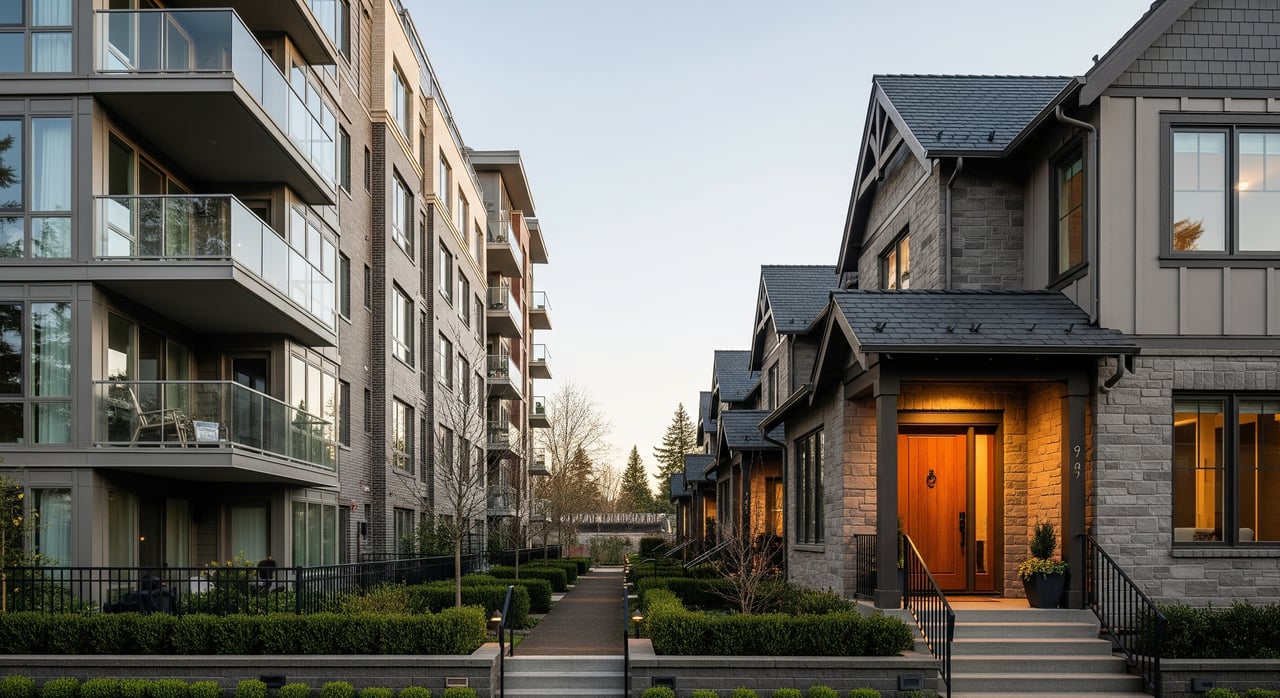
Trying to decide between a condo and a townhome in Orenco Station? You are not alone. Many buyers weigh transit access, HOA dues, and long-term resale as they consider this walkable Hillsboro hub. In this guide, you will learn how condos and townhomes in Orenco differ, what costs to budget, and how to compare resale and financing factors so you can choose with confidence. Let’s dive in.
Orenco Station at a glance
Orenco Station is a transit-oriented, mixed-use neighborhood centered on the MAX Blue Line station and the retail and park corridor. You will find a blend of multi-family condominiums and attached single-family townhomes. Homes here typically offer smaller lots, higher walkability, and low yard maintenance.
Buyers in Orenco often prioritize quick MAX access, proximity to shops and parks, and less exterior upkeep. Development spans the early 2000s through the 2010s with later infill, so you should confirm each building’s year and condition through property records.
Condos: what to expect
Condominiums in Orenco are usually in multi-unit buildings, including stacked or single-floor layouts. Many sit closer to the station and retail spine, where density is higher. Unit sizes often range from studios to two bedrooms, and larger buildings may include elevator access and shared vertical circulation.
HOA coverage commonly includes exterior maintenance, structure insurance for common elements, common-area landscaping and utilities, and reserve contributions. What is included varies by building, so you should verify details in each HOA’s CC&Rs, budget, and resale disclosure.
On the buyer side, condos often have a lower entry price and minimal yard work, which can appeal to first-time buyers, downsizers who want walkability, and some investors. On the resale side, demand can soften if reserves are low, assessments are high, parking is limited, or the building has unresolved condition issues. Lender project approval and owner-occupancy levels can also affect financing and marketability.
Townhomes: what to expect
Townhomes are ground-oriented attached homes with private entrances, often 2 to 3 stories with garages and small patios or decks. In Orenco, they intermix with low-rise blocks and fringe areas rather than concentrating right next to the station.
Townhome HOAs may cover exterior elements and roofing, but coverage varies. You still need to verify what the HOA maintains versus what you maintain. Many buyers choose townhomes for the single-family feel, extra storage, and private access while still keeping maintenance lower than a detached home.
On resale, well-presented townhomes with garages and street-style frontage often track closer to the single-family market. You will still navigate shared walls and HOA rules, but financing tends to be more straightforward than condominiums because lenders usually treat townhomes like single-family properties.
Supply and pricing signals to watch
The best way to compare Orenco condos and townhomes is to pull a 12- and 24-month snapshot from the local MLS. Focus your search on the Orenco Station neighborhood polygon and filter by property type. Track these metrics for each:
- Active inventory and new listings
- Closed sales count
- Median sale price and price per square foot
- Average days on market
- Sale-to-list price ratio
- Frequency of price reductions
Expect to see more condos near the station and retail corridor, with townhomes dispersed among low-rise blocks. New condo projects have been less common in recent years, while newer townhouse infill may appear sporadically. Because micro-markets move quickly, use current comps and avoid broad zip-code averages when making decisions.
HOA dues and coverage checklist
HOA dues can vary widely based on age, amenities, and what the association maintains. Instead of using a citywide average, review the actual documents for each building or community. Confirm the following:
- Monthly or quarterly dues amount and billing schedule
- What the fee covers: exterior maintenance, roof, landscaping, trash, common utilities, master insurance, reserves
- Reserve study and current reserve balance
- History of special assessments and any upcoming projects
- Rental and pet restrictions and how they are enforced
- Parking assignment, guest parking, and storage rules
- Rules for exterior modifications and short-term rentals
Some associations include water, sewer, or bulk services like cable. Others do not. Your budget can shift meaningfully based on these line items, so always verify with current HOA documents and listing sheets.
Monthly cost model: build your estimate
To compare a condo and a townhome in Orenco, build a clear monthly model for each option. Include all the costs that affect your budget, not just the mortgage.
Start with these components:
- Mortgage principal and interest
- HOA dues converted to a monthly number
- Property taxes estimated from the county tax records
- Homeowner’s insurance (HO-6 for condos, HO-3 for townhomes; confirm any master policy gaps)
- Utilities not covered by the HOA
- Maintenance reserves for items not covered by the HOA
- Any parking or storage fees
- Potential special assessment exposure based on the reserve study and project history
Follow these steps to make it Orenco-specific:
- Pull 3 to 5 recent sold listings for condos and 3 to 5 for townhomes in Orenco Station. Note the sale price and the HOA dues from listing sheets.
- Use county property records to confirm the most recent tax bill or apply the local rate to estimate property taxes.
- Request insurance quotes that reflect the correct policy type and master policy coverage for the building or community.
- Calculate the monthly total and show HOA dues as a separate line so you can see the impact on affordability.
Watching for hidden or long-term costs can protect your budget. In condos, special assessments for roof or siding replacements can be significant. In townhomes, you may be responsible for elements like decks or garage systems depending on the CC&Rs. For condo owners, verify the master policy limits and consider loss assessment coverage as part of your HO-6 policy.
Resale and financing factors
Financing and project health matter for both liquidity and peace of mind.
- Condos: Some lenders have stricter requirements for project approval, owner-occupancy minimums, and reserves. If many units are rentals or there are financial red flags, certain loan programs may be limited. Solid reserves, up-to-date maintenance, and clear lending eligibility support resale value.
- Townhomes: Lenders typically treat them like single-family homes. That can simplify financing and broaden the buyer pool. HOA rules still apply, so verify restrictions and maintenance responsibilities.
Across both property types, parking availability, building condition, and recent capital projects can influence days on market, sale-to-list price ratios, and overall demand. When you compare two homes, weigh these factors alongside price and HOA dues.
Who each option fits
- First-time buyers: If walkability and a lower entry price are priorities, a condo can be a fit, especially if the HOA has strong reserves and favorable rules. Confirm financing options for the specific condominium project.
- Downsizers and rightsizers: If you want private access, garage space, and a layout that feels like a single-family home, a townhome often provides the right balance. If ease of living and elevator access matter most, a condo may still be the best match.
How to shortlist in Orenco
Use these criteria to narrow your choices:
- Unit type: condo or townhome
- Gross monthly housing cost: mortgage, HOA dues, taxes, insurance
- Walkability and transit: proximity to the MAX Blue Line
- Parking: assigned or deeded spaces and guest parking rules
- HOA financials: reserve study status, budget, and special assessment history
- Building age and condition: roofing, siding, drainage, and recent capital projects
- Lender acceptance: financing availability for specific condo projects
- Lifestyle rules: rental and pet policies if they matter to you
The right shortlist balances location, monthly cost, and long-term fit. A side-by-side comparison will help you see tradeoffs clearly.
Next steps
If you are weighing condos against townhomes in Orenco, a neighborhood-level snapshot will give you clarity. A targeted MLS pull, plus HOA document review for a few finalists, can highlight the best value for your budget and lifestyle. The Currin Collective team pairs deep Washington County expertise with a high-touch process, so you get precise data and steady guidance from first tour to closing.
Ready to compare options in Orenco Station and model your monthly costs with confidence? Connect with Currin Collective to discuss your goals or Request a Free Home Valuation.
FAQs
What is the main difference between Orenco condos and townhomes?
- Condos are units in multi-story buildings near the station with shared systems and HOAs that typically cover exterior elements, while townhomes are ground-oriented attached homes with private entrances and garages that often feel more like single-family living.
How do HOA dues typically differ for Orenco condos vs. townhomes?
- Dues vary by building and coverage; condos and townhomes can be comparable depending on what the HOA maintains, so you should verify each community’s budget, reserve study, and inclusions before comparing monthly costs.
What financing issues should I check for Orenco condos?
- Ask your lender about project approval, owner-occupancy levels, reserves, and any restrictions that may limit FHA, VA, or some conventional loans for the specific condominium project you are considering.
How do resale factors differ for condos vs. townhomes in Orenco?
- Condo resale can be sensitive to reserves, assessments, parking, and building condition, while townhome resale often tracks the single-family market more closely when a private garage and street-style frontage are present.
What should go into my monthly cost model for an Orenco home?
- Include mortgage principal and interest, HOA dues, property taxes, insurance, utilities not covered by the HOA, a maintenance reserve, and any parking or storage fees, plus potential exposure to special assessments based on the reserve study.